📖Introduction

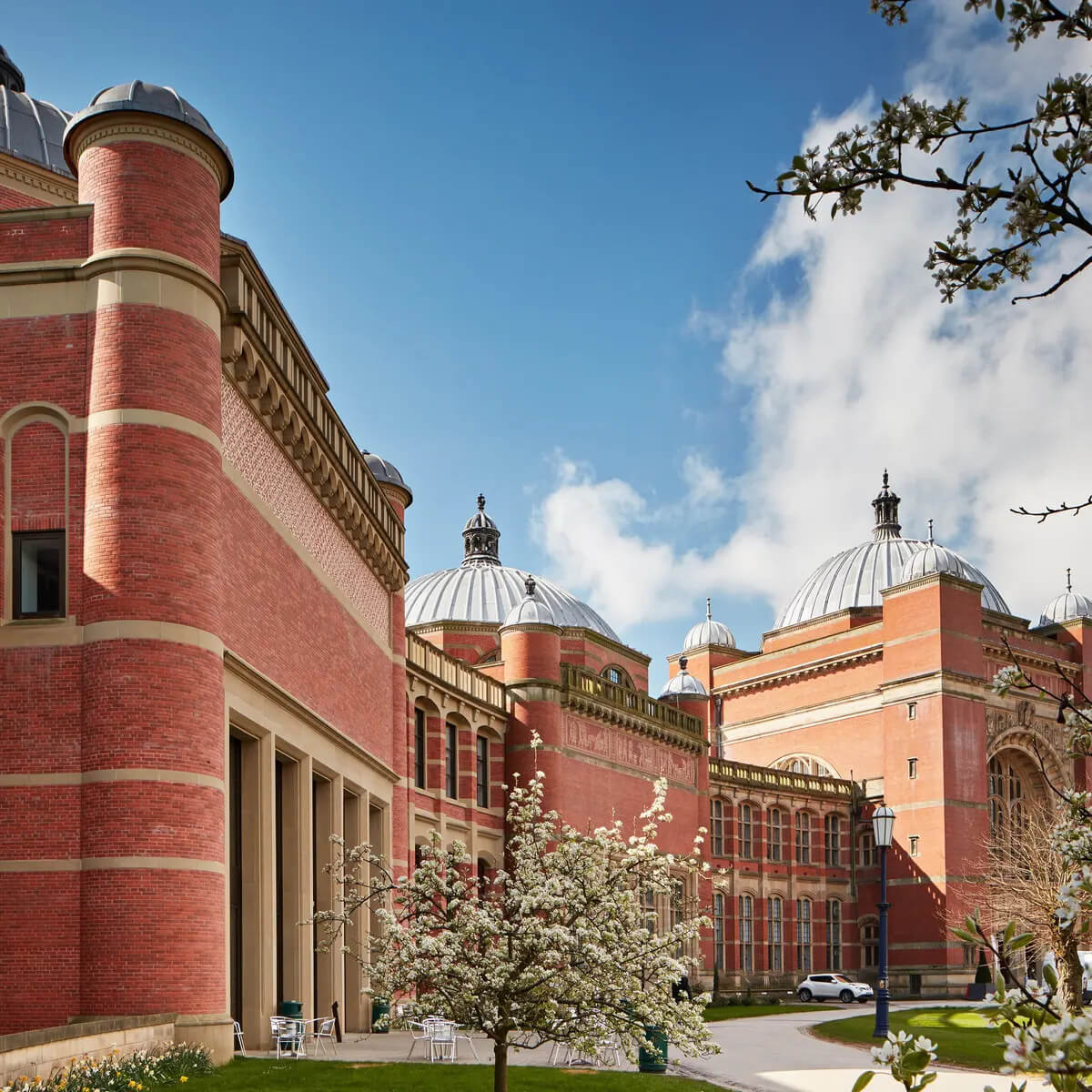
The University of Birmingham is a public research university located in Edgbaston, Birmingham, United Kingdom. It received its royal charter in 1900 as a successor to Queen's College, Birmingham, and Mason Science College, making it the first English civic or 'red brick' university to receive its own royal charter. The University have a long and proud history of firsts, at the University of Birmingham; they were the first – and are now one of the largest - civic universities in the UK.

At Birmingham, the institution teach and research across the full breadth of academic disciplines, creating a vibrant community with multi-disciplinary opportunities for research and education. The University is a truly international community consisting of more than thousands of staff, students, and alumni. The student community is not only one of the largest of any UK university, it is highly diverse, with 82 per cent of home undergraduate students from state schools, 32 per cent from a BAME background, and 35 per cent in the first generation of their family to attend university.

Show less
Show more

📖Program Curriculum

You will complete four taught modules, an industry placement (or alternative module) and a dissertation:

Taught modules
Development and Production Processes for Film and Television
This module is delivered through a combination of small project assignments, masterclasses from industry experts, and group seminar work. It provides you with a realistic overview of the challenges and processes of research, development and commissioning for film, television and digital platforms.
Assessment: Group pitch/presentation (50%) and production dossier (50%)

Documentary Filmmaking
This module acquaints you with critical concepts in documentary filmmaking, recognisable across histories, genres, nationalities and media. Weekly seminars cover a range of styles and tones of documentary film from early cinema to reality television, providing you with a strong appreciation of the technical and editorial complexities of documentary filmmaking, and an understanding of the relationship between intention and form.
Assessment: Epigraphic visualisation and written essay

Research Skills in Film and Television

This module helps you to decide on a topic for your audio-visual or written dissertation and shows you how to plan your final piece of work. It guides you through using academic research resources such as journals and online databases, as well as developing research skills used specifically in the film and television industries.

Assessment: Written assignments

Guided Editing/Guided Reading
This module helps to develop the skills required for your dissertation. For those wishing to complete an audio-visual dissertation, it trains you in the technical skills necessary to film, capture and edit digital film and video projects. Those completing a written dissertation will be trained in research and critical enquiry, and will work on a literature review to form the basis of their extended research project.
Assessment: You will produce a three to five minute film on a subject of your choice. Alternatively, those who plan to submit a written dissertation complete a 4,000-word guided reading essay.

Placement and Training
You can also complete a Placement and Training module as part of the programme.

This not only offers valuable work experience opportunities to MA Film and Television students, but also provides the support you need to identify your personal strengths and assist you with CVs, cover letters and applications for roles in the screen industries - ensuring you are best prepared for life and employment after graduation.

Our dedicated Placement Coordinator will work with you to identify suitable placement opportunities; from broadcast television and independent production companies, to freelance filmmakers and media projects both on campus and with external organisations. We have long-established links with a range of companies, but students are also welcome to source their own placements if they wish, within certain parameters.

There is an alternative Media Industries module for students who do not undertake placements.

Assessment: Feedback from your placement host/s and a 2,500-word reflexive essay. Submission dates for the placement essay usually fall in the summer.

More information on the Placement and Training module for students and employers, including frequently asked questions and information relating to Covid-19
Dissertation
In addition to your taught modules and the placement or media industries module, you will complete a dissertation. You have the option of submitting either a written or an audio-visual dissertation (which must be a factual piece).

Most students take this opportunity to build their production skills further, creating a 20-25 minute documentary film that showcases their filmmaking skills and their ability to produce content that has both intellectual and aesthetic integrity, and can go on to form part of their showreel or portfolio. Your film will be underpinned by independent research and academic supervision. If you choose to do an audio-visual dissertation you will also submit a 4,000-word defence essay.

If you choose to do a written dissertation, its length will be 15,000 words.

Show less
Show more

🏫About University of Birmingham, England

Effective leadership is a hallmark of the University of Birmingham. Today, the institution have a global reputation as a rich and diverse institution known for inspirational thinking, financial stability, and strong local, national, and international partnerships. Its heritage as the original ‘redbrick’ is combined with one of the most compelling and ambitious agendas in higher education. The University has been transformed in recent years, characterised by major investments in academic staffing, investment of £1 billion in campus facilities, strong and improving outcomes for its students, annual growth in research performance, and bold new moves such as establishing the only university-run secondary school and sixth form in the country, and opening a new campus in Dubai.

The single biggest investment that the University has made in recent years is in people. Since 2015 the University have expanded its academic staff numbers by more than 500, including world-class researchers and teachers, leading early-career academics (including through a much-emulated Birmingham Fellows scheme), and Interdisciplinary Professorial Fellows, its innovative scheme to enhance cross-disciplinary working. The University are developing an enviable reputation for attracting some of the finest minds in the world to teach and research at the University.

🏠 Accommodation

You will need to book the accommodation after you have been accepted.

You can choose to live on campus or off campus in private accommodation.

How to book:

  • Make a booking online after you have been accepted (in this case please let us know your choice when you apply).
  • Register when you arrive - its not possible to reserve a room before arriving. You can arrive a few days before and book it
Show less
Show more

💰 Fees

Application Fee:

442 RMB

Tuition fee:

21,960 GBP per year

21,960 GBP in total

Entry Requirements

You are not eligible to apply to this program because:

The minimum age is 18.

English fluency is required.
You need to be either:
- A native English speaker
- Studied in English at high school or a degree
- Have passed IELTS level 6.5 or TOEFL 95 or above.

Minimum education level: Bachelor's.

The program is competitive, you need to have a high grades of Average A, 70%, or a high GPA.

All students from all countries are eligible to apply to this program.

Is this not correct? You can edit your profile or contact us.
Or see the list of programs you are eligible for here .
Check Your Eligibility Show Suitable Programs

📬 Admissions Process

3 Steps to Apply to a University

Application step 1

Application step 2

Application step 3

Please choose the programs here , "You are advised to select 2-3 programs to increase your chances of getting accepted.

Required Documents:

  • Passport
  • Graduation certificate
  • Passport size photo
  • Official transcript
  • Personal statement
  • English certificate (You can take the English test online)
  • Guarantor letter
  • 2 Recommendation letters

Preparing documents:

You can start your application now and send the application documents during your application. Some documents you can send later if you don’t have them right away. Some more info about preparing application documents is here

Show more

Application process:

Applying Online is simple in just a few steps. More information is available here.

The first steps are to choose the programs, pay the application fee and upload the application documents.

Once submitted to Global Admissions, we will review your application within 2-3 days and proceed to the university or ask you for further clarification

After it has been processed to the university you will receive your unique application ID from each university.

The university may contact you directly for further questions.

We will then follow up each week with the university for updates. As soon as there is any update we will let you know. If you have made other plans, decide to withdraw / change address at any time please let us know.

After you have been accepted you will receive your admissions letter electronically and asked to pay the non-refundable deposit to the university.

Once you have paid the deposit the university will issue you the admissions letter and visa form to your home country.

Show less
Here is some more information about the enrollment process after you have been accepted.

❓ Have a Question?

There are no similar questions. Please send us your question below

    📝 University of Birmingham, England Reviews

    (No Reviews)
    Write a review

    📍 Location

    🛏️ Accommodation

    🍜 Food

    🏓 Facilities

    💲 Value for money

    👨‍🏫 Classes

    🕺 Student experience

    🗣️ Recommend a friend?