


📚About the Program
Creating the next generation of high-quality practitioners for the IoT industry.

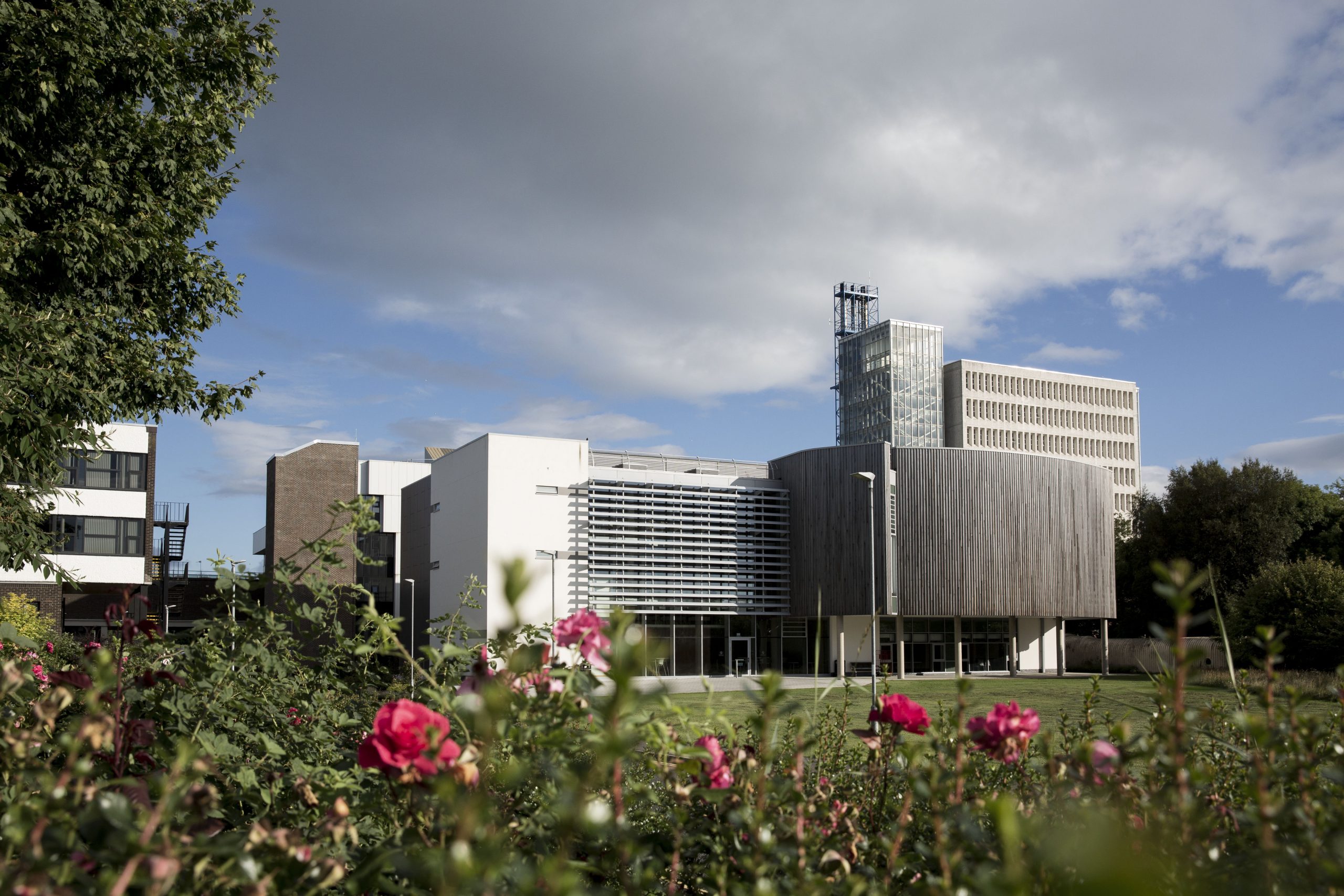
Ulster University
The Master’s in Internet of Things at Ulster University is a 2 years long program for international students, taught in English.
Ulster University
The Master’s in Internet of Things at Ulster University is a 2 years long program for international students, taught in English.
IoT Networks & Security
IoT describes the interconnectivity of uniquely identifiable devices embedded in the environment through existing internet protocols and infrastructure. It is an evolution of the Internet which is set to massively impact all aspects of our daily lives, from driverless cars to smart healthcare. There are more connective devices than people and by 2020, it is estimated that there will be 50 billion IoT devices. This disruptive technology offers a multitude of sensing and actuation opportunities, however, also creates new challenges in security, privacy and data governance. This module provides a critical understanding of IoT architecture, storage and communication; and the ensuing computing challenges of managing big data in a secure way.
Big Data & Infrastructure
Big Data is the term for a collection of datasets so large and complex that they become difficult to process using traditional database tools. The challenges posed by big data include capture, curation, storage, search, scaling, sharing, transfer, analysis, and visualisation. Database systems for big data support numerous data storage strategies within their specific class. These classes of databases may be oriented towards handling specific types of data or may operate generically. These storage strategies, and related schemas, are more dynamic than traditional database systems, offering the potential for increased flexibility, scalability and customisation. In this context cloud computing has provided a new type of dynamically scalable platform on which to store and process data. Cloud capabilities are highly available, highly durable, and can dynamically scale to meet the storage and processing demands of the application.
Embedded Systems & Sensors
An embedded system is an electronic or computer system which performs dedicated control and data access functions in electronics-based systems and applications. Embedded systems play a crucial role in modern communications, automotive systems, consumer electronics and medical devices and will provide the foundation for the next generation of smart connected IoT devices and the digital enterprise. This module covers the most important aspects of embedded
systems and will provide a successful student with theoretical and practical knowledge on the feasibility, reliability, and security of electronic systems, especially those important for existing and future IoT applications.
Pervasive Computing
Technology is now being used transparently and seamlessly within every part of our daily lives. This is driven by advances in computing technology, creating devices that are progressively smaller, more powerful and increasingly connected. This in turn has led to a growing trend of embedding computational capability into everyday objects. We are now witnessing an era, where almost any device, from clothing, to appliances, homes, cars, and the human body, is imbedded with a microprocessor that connects the device to an infinite network of other devices. With such a technology rich paradigm we are now witnessing, for the first time, pervasive computing solutions with the ability to provide support within our homes, the community and in the workplace. This module provides a critical awareness of the emerging hardware and software components within pervasive computing and demonstrates its use across a range of application domains. The module examines the issues and challenges concerned with wireless networks, resource restricted computing, protocols and algorithms. The module has a strong practical element and provides the opportunity for students to develop applications for wireless sensing devices, context aware solutions and allows them to systematically test these solutions through development of evaluation frameworks.
Statistical Modelling & Data Mining
With huge amounts of data being stored within databases and data warehouses, automated data analytics and mining techniques are increasingly becoming essential components of any information system. With this comes the potential to automate the extraction of interesting knowledge, through descriptive and predictive models. These techniques span both contemporary statistics and data mining and can provide valuable information to inform business strategy, identify purchase patterns, and so forth. This module first provides a systematic understanding of probability and statistics, including topics such as, random variables, probability distributions, Bayesian inference, hypothesis testing, confidence intervals and linear regression. It then considers the main ideas of linear and generalised linear statistical modelling which can be applied in data mining and the exploration of data. Finally, students will develop in-depth understanding of Data Mining principles and techniques and will apply these to data from within various domains.
Digital Signal Processing
The rapid growth of computer processing especially in embedded systems and, more particularly, with digital signals makes it essential that studies specialising in IoT should acquire a knowledge of digital signal processing methods. Digital signal processing concerns all aspects of the acquisition to processing life-cycle of real world signals. The emergence of low cost and pervasive systems in the form of the IoT provides new opportunities for the embedding of DSP technology. This module will introduce students to the concept of sampling real world signals that are often initially present as analogue quantities. Students will gain a fundamental understanding of issues associated with the digitisation of these signals and this will form the necessary foundation for advanced understanding of complex DSP systems. Students will appreciate the properties of signals in both the time and frequency domain and will build upon this appreciation to understand and develop algorithms for the conditioning, processing and analysis of a range of digital signals. Included will be the in-depth investigation of techniques to filter digital signals. This topic will be approached from both a design and an implementation perspective. The module will provide numerous
opportunities for students to apply DSP techniques to real world examples.
Masters Project
The aim of the project is to allow the student to demonstrate their ability in undertaking an independent research project for developing theoretical perspectives, addressing research questions using data, or analysing and developing real-world solutions. They will be expected to utilise appropriate methodologies and demonstrate the skills gained earlier in the course when implementing the project.
As part of the project development activity, they will be required to extract and demonstrate knowledge from the literature in an analytic manner and develop ideas and appropriate hardware and software implementations. This may involve the development of a hardware sensor component or may access existing hardware to develop new/ novel software processing or data analytics. This will typically be followed by a structured analysis of needs for a realistic application or actual organisation and identification and application of tools/techniques required to deliver a well-formed solution. Through the project, the student will develop capabilities to analyse cases studies related to IoT / Artificial Intelligence / Advanced Computer Science and its application in a range of domains including transport, environment, health and commerce. The project may further create improvement plans and recommendations for future implementation based on the tools/technologies experienced during the programme of study.
In summary, the Masters Project represents a piece of work performed by the student under suitable staff supervision which draws both from the practical and creative nature of a problem-solving project and the traditional, scholarly exposition of an area of study. The content of the work must be original and contain a critical appraisal of the subject area.
Show lessYou will need to book the accommodation after you have been accepted.
You can choose to live on campus or off campus in private accommodation.
How to book:
Application Fee:
237 RMB
Tuition fee:
17,730 GBP per year
35,460 GBP in total
The minimum age is 18.
English fluency is required.
You need to be either:
- A native English speaker
- Studied in English at high school or a degree
- Have passed IELTS level 6.5 or TOEFL 95 or above.
Minimum education level: Bachelor's.
The program is competitive, you need to have a high grades of Average A, 70%, or a high GPA.
All students from all countries are eligible to apply to this program.
Please choose the programs here , "You are advised to select 2-3 programs to increase your chances of getting accepted.
Required Documents:
Preparing documents:
You can start your application now and send the application documents during your application. Some documents you can send later if you don’t have them right away. Some more info about preparing application documents is here
Application process:
Applying Online is simple in just a few steps. More information is available here.
The first steps are to choose the programs, pay the application fee and upload the application documents.
Once submitted to Global Admissions, we will review your application within 2-3 days and proceed to the university or ask you for further clarification
After it has been processed to the university you will receive your unique application ID from each university.
The university may contact you directly for further questions.
We will then follow up each week with the university for updates. As soon as there is any update we will let you know. If you have made other plans, decide to withdraw / change address at any time please let us know.
After you have been accepted you will receive your admissions letter electronically and asked to pay the non-refundable deposit to the university.
Once you have paid the deposit the university will issue you the admissions letter and visa form to your home country.
Show lessThere are no similar questions. Please send us your question below
Join 180,000+ international students and get monthly updates
Receive Admissions, Scholarships & Deadlines Updates from Universities.
Unsubscribe anytime.