📖Introduction

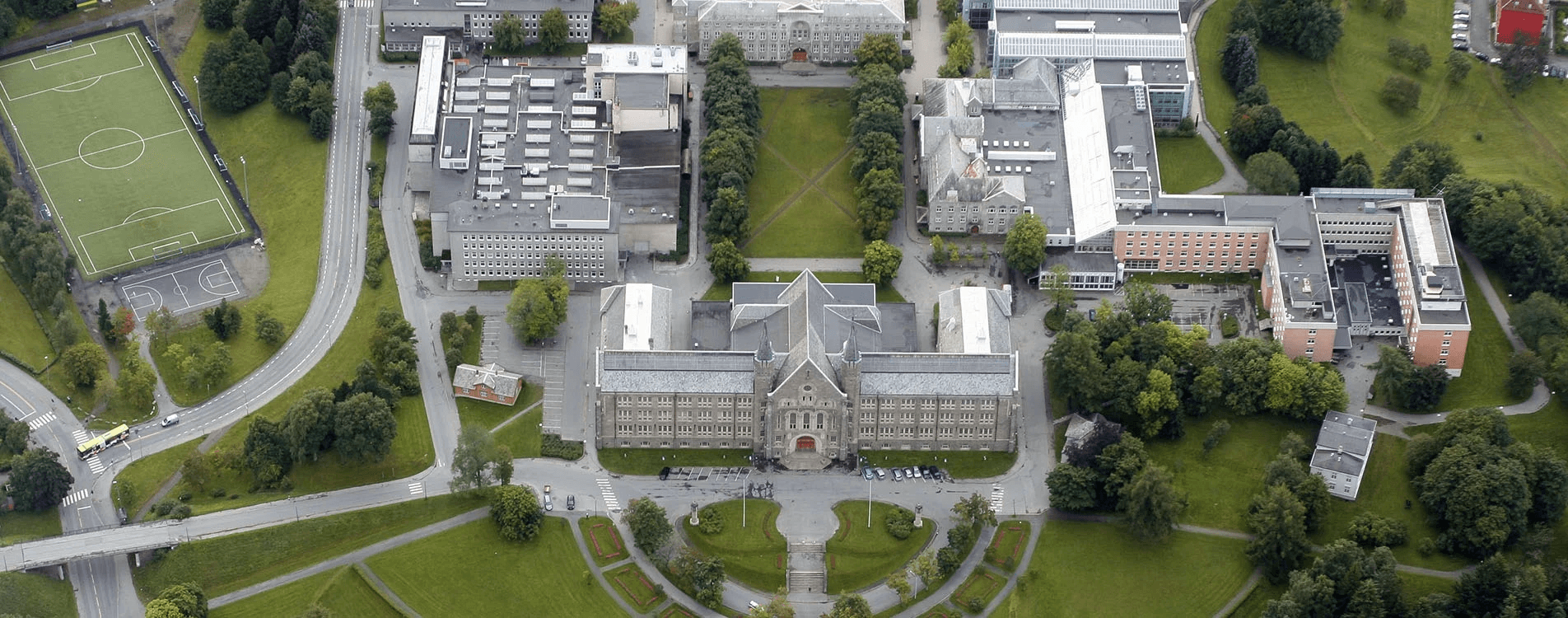
The Norwegian University of Science and Technology is a public research university in Norway with the main campus in Trondheim and smaller campuses in Gjøvik and Ålesund. The largest university in Norway, NTNU has over 8,000 employees and thousands of students. NTNU is a young institution with a long history. The university, in its current form, was established in 1996 by the merger of six research and higher education institutions in Trondheim. The university's root goes back to 1760, with the foundation of Det Trondhiemske Selskab (Trondheim Academy), which in 1767 became the Royal Norwegian Society of Sciences and Letters.

NTNU has a main profile in science and technology, a variety of programmes of professional study, and great academic breadth that also includes the humanities, social sciences, economics, medicine, health sciences, educational science, architecture, entrepreneurship, art disciplines and artistic activities.

Show less
Show more

📚About the Program

The European chemical industry generates over thousand billions of euros per year, and is the most important sector worldwide, with 1.14 million of direct employments and 3 additional millions of indirect employments. The chemical industry is a key contributor to the sustainable development of our society, ideally equipped to provide solutions and the technological backbone to exciting, high-tech developments that shape our lifestyle and our future. Show less
Show more

📖Program Curriculum

The programme runs full-time over 24 months (120 ECTS) and consists of advanced courses (90 ECTS) and a Master Thesis, with a dissertation (30 ECTS).

During Semester 1, students will follow different individually tailored combinations of courses integrated in one of the fundamental modules (1-5) in UBx, ULiège or UPPA.
During Semester 2, they will follow another individually tailored combination of courses integrated into the advanced specialised modules (6-10) in NTNU, UPO or EHU.
During Semester 3 the students must follow the compulsory INCyTA course (6 ECTS) as a part of the Module 10.
The MSc Thesis research is undertaken during Semester 4 (30 ECTS) and consists of a 5-6 month research under the supervision of a PhD holder.
Every student will follow a Joint Programme, by combining the different disciplines that can be studied at each of the Partner universities (these are the complementary profiles in which each Partner excels and, as such, recognized internationally):

Pollutant Biogeochemistry and Integrative Ecotoxicology in UBx;
Water and Wastewater Pollution in UPPA;
Marine Ecology and Ecotoxicology in ULiège;
Arctic Contamination and Toxicology in NTNU;
Applied and Regulatory Ecotoxicology in UPO;
Advanced Analytical Chemistry and Translational Ecotoxicology in EHU.
The coursework is arranged in 10 modules:

MODULE 1: Biogeochemistry of Environmental Pollutants
MODULE 2: Fundamentals in Toxicology and Ecotoxicology
MODULE 3: Environmental Analytical Chemistry
MODULE 4: Advanced Ecology
MODULE 5: Environmental Data Analysis
MODULE 6: Advanced Environmental and Analytical Chemistry
MODULE 7: Applied Ecology and Ecophysiology
MODULE 8: Advanced and Applied Ecotoxicology
MODULE 9: Environmental Risk Assessment and Management
MODULE 10: Researcher’s Career
Throughout the coursework, students can make a selection between alternative mobility pathways; choosing one of these pathways is not a requirement and they will not appear as specialisation in the Joint Diploma and EDS. Through any of the pathways, the students have the opportunity to travel, from chemistry and molecular biology to ecological and management issues and from short-term responses of living systems to chemicals to their long-term; thus achieving a translational science background. All the students follow advanced courses in UPV/EHU in Semester 3, with a relevant, but not compulsory, imprint in the field of advanced environmental risk assessment and skills for a researcher’s career in ECT.

The coordinator of the program is

University of the Basque Country
For further information and admission requirements, please visit the webpage for this program.

Show less
Show more

🏫About Norwegian University of Science and Technology

Norwegian University of Science and Technology (NTNU) is a university with an international focus, with headquarters in Trondheim and campuses in Ålesund and Gjøvik. NTNU is consistently ranked in the top one percentage among the world's universities. NTNU has the main national responsibility for education and research in engineering and technology, and is the successor of Norway's preeminent engineering university, the Norwegian Institute of Technology (NTH), established by Parliament in 1910 as Norway's national engineering university. In addition to engineering and natural sciences, the university offers higher education in other academic disciplines ranging from medicine, psychology, social sciences, the arts, teacher education, architecture and fine art. NTNU is well known for its close collaboration with industry, and particularly with its R&D partner SINTEF, which provided it with the biggest industrial link among all the technical universities in the world.


Mission

Our mission covers both the expectations that society has of NTNU and the problems in society that we ourselves want to solve. We have a general mission, similar to other universities, and a specifi c mission, which makes us unique.

🏠 Accommodation

You will need to book the accommodation after you have been accepted.

You can choose to live on campus or off campus in private accommodation.

How to book:

  • Make a booking online after you have been accepted (in this case please let us know your choice when you apply).
  • Register when you arrive - its not possible to reserve a room before arriving. You can arrive a few days before and book it
Show less
Show more

💰 Fees

Application Fee:

$0 USD

Tuition fee:

19,000 EUR per year

38,000 EUR in total

Entry Requirements

You are not eligible to apply to this program because:

The minimum age is 18.

English fluency is required.
You need to be either:
- A native English speaker
- Studied in English at high school or a degree
- Have passed IELTS level 6.5 or TOEFL 95 or above.

Minimum education level: Bachelor's.

The program is competitive, you need to have a high grades of Average A, 70%, or a high GPA.

All students from all countries are eligible to apply to this program.

Is this not correct? You can edit your profile or contact us.
Or see the list of programs you are eligible for here .
Check Your Eligibility Show Suitable Programs

📬 Admissions Process

3 Steps to Apply to a University

Application step 1

Application step 2

Application step 3

Please choose the programs here , "You are advised to select 2-3 programs to increase your chances of getting accepted.

Required Documents:

  • Passport
  • Graduation certificate
  • Passport size photo
  • Official transcript
  • Personal statement
  • English certificate (You can take the English test online)
  • Guarantor letter
  • 2 Recommendation letters

Preparing documents:

You can start your application now and send the application documents during your application. Some documents you can send later if you don’t have them right away. Some more info about preparing application documents is here

Show more

Application process:

Applying Online is simple in just a few steps. More information is available here.

The first steps are to choose the programs, pay the application fee and upload the application documents.

Once submitted to Global Admissions, we will review your application within 2-3 days and proceed to the university or ask you for further clarification

After it has been processed to the university you will receive your unique application ID from each university.

The university may contact you directly for further questions.

We will then follow up each week with the university for updates. As soon as there is any update we will let you know. If you have made other plans, decide to withdraw / change address at any time please let us know.

After you have been accepted you will receive your admissions letter electronically and asked to pay the non-refundable deposit to the university.

Once you have paid the deposit the university will issue you the admissions letter and visa form to your home country.

Show less
Here is some more information about the enrollment process after you have been accepted.

❓ Have a Question?

There are no similar questions. Please send us your question below

    📝 Norwegian University of Science and Technology Reviews

    (No Reviews)
    Write a review

    📍 Location

    🛏️ Accommodation

    🍜 Food

    🏓 Facilities

    💲 Value for money

    👨‍🏫 Classes

    🕺 Student experience

    🗣️ Recommend a friend?