📖Introduction

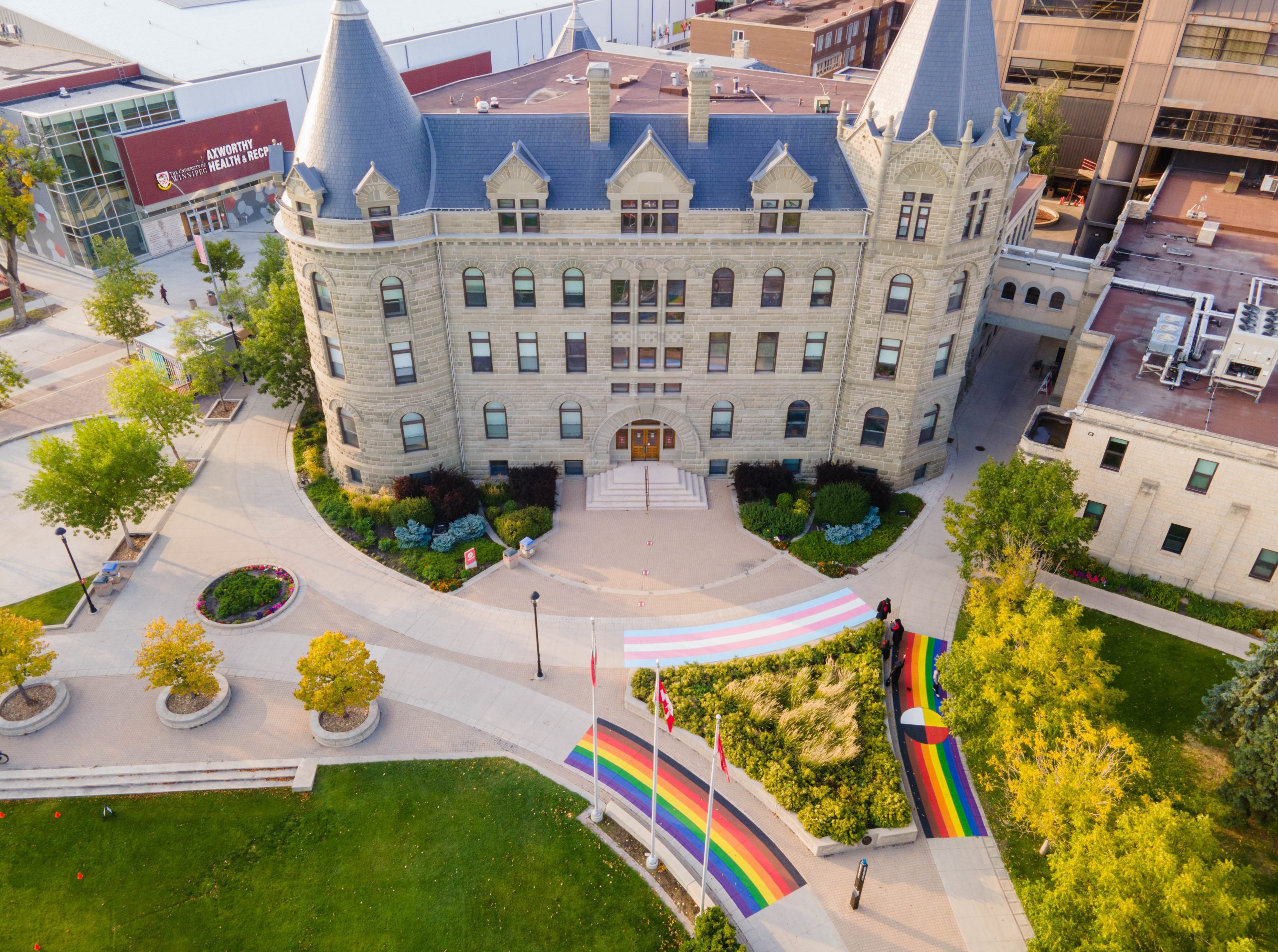
The University of Winnipeg, located in Winnipeg, Manitoba, Canada, is a public research university with a rich history dating back to its founding in 1871. It offers a diverse range of undergraduate and graduate programs in areas such as arts, science, business and economics, education, kinesiology, and indigenous studies.

The University of Winnipeg is recognized for its inclusive and student-centered approach to education. It fosters a dynamic learning environment with small class sizes, encouraging active participation and meaningful engagement. The university values interdisciplinary studies, critical thinking, and the integration of theory and practice.

Show less
Show more

📚About the Program

Whether you’re interested in being onstage, backstage, or behind the camera, the Department of Theatre and Film at UofW can offer you all this and more. Our faculty of working professionals has established our reputation as the go-to centre in Manitoba for training in the practical aspects of making both theatre and film. Our graduates are resourceful, knowledgeable, and daring and are able to work comfortably in a wide range of professions. You only need to look at the program or credits for a play or film/tv project happening in Manitoba to see a long list of our graduates - proof positive that Theatre and Film at UofW will see to it that you are prepared. We offer a 3-Year General BA in all streams, a 4-Year Honours BA in most streams, and a Minor. Have a look at the menu on the left to learn more about degree studies in Filmmaking, Acting, Theatre Production and Stage Management, Directing, Playwriting, Design, and Drama in Education, and our joint Dance Program with the School of Contemporary Dancers. Show less
Show more

📖Program Curriculum

Program of study for the General BA

Compulsory:

THFM-1010(6) Introduction to Film

ONE OF:

THFM-1001(6) Intro to Theatre: Performance (recommended so filmmakers know about acting)

or THFM-1003(6) Introduction to Theatre: Indigenous Performance (also a performance course)

or THFM-1002(6) Introduction to Theatre: General

AND:

THFM-2310(6) Filmmaking I: Screen Narrative Technique

THFM-2410/HIST-2191(6) History of Film

AND ONE (OR MORE) OF:

THFM-3310(6) Filmmaking II: Directing the Short Film

THFM-3312(6) Sound Editing for Film

THFM-3313(6) Advanced Picture Editing

Students must also fulfill the other requirements for the 3-year degree as specified in the University of Winnipeg Academic Calendar.


Here are brief descriptions of the courses in the Filmmaking area of study:

THFM-1010(6) INTRODUCTION TO FILM

This course introduces the student to aspects of the art of film through lectures, screenings and some practical involvement in the filmmaking process.

THFM-1001(6) INTRODUCTION TO THEATRE: PERFORMANCE (recommended)

This course introduces students to the fundamental concepts of theatre and drama and takes them step-by-step through the basic processes of acting. We recommend Filmmakers take this course because they will work with actors and must therefore understand their process.

OR

THFM-1002(6) INTRODUCTION TO THEATRE: GENERAL

This course includes the study of a number of plays and detailed coverage of a variety of aspects of the modern theatre. It involves attending plays produced in Winnipeg and discussing them.

OR

THFM-1003(6) INTRODUCTION TO THEATRE: INDIGENOUS PERFORMANCE

This intro performance course honours Indigenous teachings and ways of knowing, combined with Euro-western approaches to actor training. All of the plays used for scenework are from Indigenous sources, and students will have the opportunity to create their own stories as well.

THFM-2310(6) FILMMAKING I: SCREEN NARRATIVE TECHNIQUE

This course is a practical introduction to storytelling on screen from the director’s perspective, including the basics of storyboarding, camera angles, setups, moves, and editing. These techniques are explored using the medium of video in both field and studio environments.

THFM-2410 / HIST-2191 (6) HISTORY OF FILM

This course covers the history of the art of film and the film industry from its beginnings to the present. The emphasis is on the development of filmmaking techniques and the impact of changing technologies.

THFM-3310(6) FILMMAKING II: DIRECTING THE SHORT FILM

This is an advanced filmmaking course synthesizing the various elements of film grammar explored in Filmmaking I towards the creation of longer visual narratives. Emphasis will be on the techniques employed for shooting and sequence-building of an extended dramatic narrative. Entrance to this course is by application and permission of the instructor only.

THFM-3312(6) SOUND EDITING FOR FILM

This is a practical course on sound editing, sound theory, and the history of sound in film. Students learn the process and technique of sound editing for film using Pro-Tools software to input sounds, edit dialogue tracks, build effects tracks, process sounds using EQ plug-ins, and mix tracks.

THFM-3313(6) ADVANCED PICTURE EDITING

This course focuses on both continuity-style editing and non-narrative editing techniques and examines standard narrative editing technique from assembly through the various rough-cut stages to a fine cut using digital non-linear editing systems. Students learn the importance of pacing and rhythm within a scene and sequence, how to cut for dramatic effect, how to cut around continuity problems, techniques for "invisible" cutting, and montage editing.


Other popular options (not necessarily offered every year):

THFM-2311(6) FILM COMEDY

We take a look at film comedy from the earliest silent film comedies to the contemporary comedies from the perspective of the cinematic techniques used to achieve a comic action. Emphasis is on an exploration of the cinematic tools of the comedy filmmaker; this involves some practical filmmaking work.

THFM-2312(6) DOCUMENTARY FILMMAKING

In this course emerging filmmakers are introduced to documentary filmmaking tools and techniques. Beginning with screenings and lectures, then moving to hands-on experience, students explore and experience non-fiction storytelling through an examination of contemporary filmmaking practices and the opportunity to conceive, develop, and produce their own short non-fiction films.

THFM-2510(3) INTRODUCTION TO PRODUCING FOR FILM

Students learn about the business of Canadian film and television from the perspective of the producer including the several stages of an independent film production: concept development, financing, production, post-production, and distribution, paying specific attention to building the creative team, script development, research and marketing, finance and funding, legal and insurance issues, as well as business affairs and etiquette.

THFM-2610(3) SCRIPT AND SCREEN

This course examines significant screenplays as examples of the craft of screenwriting, and as illustrations of the screenwriter’s contribution to the filmmaking process.

THFM-2611(3) INTRO TO SCREENWRITING

This is a practical course that introduces the student to the basics of screenwriting.

THFM-2612(3) SCRIPT AND THE SMALL SCREEN

This course focuses on the narrative strategies that teleplay writers in drama series have employed to maintain viewer interest despite frequent interruptions and breaks from episode to episode or season to season.

THFM-3611(6) ADVANCED SCREENWRITING

This advanced workshop course focuses on the development of longer dramatic narratives. Students develop half-hour to feature-length dramatic scripts, and look at the role of the screenwriter in Canadian Filmmaking.

We have offered Special Studies courses on such topics as Experimental Film, Film Horror, etc.


The following Theatre courses are also useful to students of Filmmaking:

THFM-2201(3) PRINCIPLES OF DESIGN

This hands-on course provides an introduction to the principles and practice of theatrical design in sets and costumes.

THFM-2602(3) LIGHTING DESIGN

Another practical course, this is a study of both lighting techniques and the principles of design interpretation.

THFM-2801(6) PRODUCTION I

This course provides a survey of the technical aspects of theatrical and media production, concentrating on facilities, scenery construction, lighting, and an introduction to sound.

Students can combine Filmmaking with Acting, with careful planning.

Show less

Show more

🏫About The University of Winnipeg

The University of Winnipeg, located in Winnipeg, Manitoba, Canada, is a dynamic and inclusive public research university with a history dating back to 1871. Committed to academic excellence and social justice, the university offers a diverse range of undergraduate and graduate programs across various fields of study. The University of Winnipeg prides itself on its student-centered approach to education. With small class sizes and accessible faculty members, students receive individual attention and support throughout their academic journey. The university fosters a vibrant learning environment that promotes critical thinking, collaboration, and hands-on experiences. Undergraduate students at The University of Winnipeg have the opportunity to pursue majors in areas such as arts, science, business and economics, education, kinesiology, and indigenous studies. Graduate programs are offered in several disciplines, including environmental studies, development practice, and education. The university's commitment to interdisciplinary studies encourages students to explore multiple fields and develop a holistic understanding of complex issues. Research and scholarship are integral to the university's mission. The University of Winnipeg houses numerous research centers and institutes, focusing on areas such as environmental studies, urban studies, human rights, indigenous scholarship, and social justice. Faculty members and students actively engage in research projects, contributing to advancements in knowledge and addressing societal challenges. The University of Winnipeg's commitment to social justice and community engagement is evident in its outreach initiatives. Students have opportunities to engage in community-based research, volunteer work, and internships that address local and global issues. The university's commitment to sustainability is also reflected in its campus practices and initiatives, promoting environmental responsibility.

Show less
Show more

🏠 Accommodation

You will need to book the accommodation after you have been accepted.

You can choose to live on campus or off campus in private accommodation.

How to book:

  • Make a booking online after you have been accepted (in this case please let us know your choice when you apply).
  • Register when you arrive - its not possible to reserve a room before arriving. You can arrive a few days before and book it
Show less
Show more

💰 Fees

Application Fee:

681 RMB

Tuition fee:

12,587 CAD per year

50,348 CAD in total

Entry Requirements

You are not eligible to apply to this program because:

The minimum age is 18.

English fluency is required.
You need to be either:
- A native English speaker
- Studied a degree in English before
- Can demonstrate a high level of English
- Having an English certificate such as IELTS level 6 or TOEFL 95 and above is an advantage.

Minimum education level: High School.

The program is competitive, you need to have a high grades of Average A, 70%, or a high GPA.

All students from all countries are eligible to apply to this program.

Is this not correct? You can edit your profile or contact us.
Or see the list of programs you are eligible for here .
Check Your Eligibility Show Suitable Programs

📬 Admissions Process

3 Steps to Apply to a University

Application step 1

Application step 2

Application step 3

Please choose the programs here , "You are advised to select 2-3 programs to increase your chances of getting accepted.

Required Documents:

  • Passport
  • Graduation certificate
  • Passport size photo
  • Official transcript
  • Personal statement
  • English certificate (You can take the English test online)
  • Guarantor letter

Preparing documents:

You can start your application now and send the application documents during your application. Some documents you can send later if you don’t have them right away. Some more info about preparing application documents is here

Show more

Application process:

Applying Online is simple in just a few steps. More information is available here.

The first steps are to choose the programs, pay the application fee and upload the application documents.

Once submitted to Global Admissions, we will review your application within 2-3 days and proceed to the university or ask you for further clarification

After it has been processed to the university you will receive your unique application ID from each university.

The university may contact you directly for further questions.

We will then follow up each week with the university for updates. As soon as there is any update we will let you know. If you have made other plans, decide to withdraw / change address at any time please let us know.

After you have been accepted you will receive your admissions letter electronically and asked to pay the non-refundable deposit to the university.

Once you have paid the deposit the university will issue you the admissions letter and visa form to your home country.

Show less
Here is some more information about the enrollment process after you have been accepted.

❓ Have a Question?

There are no similar questions. Please send us your question below

    📝 The University of Winnipeg Reviews

    (No Reviews)
    Write a review

    📍 Location

    🛏️ Accommodation

    🍜 Food

    🏓 Facilities

    💲 Value for money

    👨‍🏫 Classes

    🕺 Student experience

    🗣️ Recommend a friend?